

Authentic 3V0-643 Dumps - Free PDF Questions to Pass
Guaranteed Accomplishment with Newest Nov-2021 FREE 3V0-643
Objective 1.1 â Deploy VMware NSX Infrastructure components:
- Exclude virtual machines from firewall protection according to a deployment plan
- Integrate the NSX Manager with vCenter Server
- Configure Single Sign On
NEW QUESTION 10
The troubleshooting NSX deployment is growing and running out of compute capacity. An additional ESXi host is being added for VXLAN.
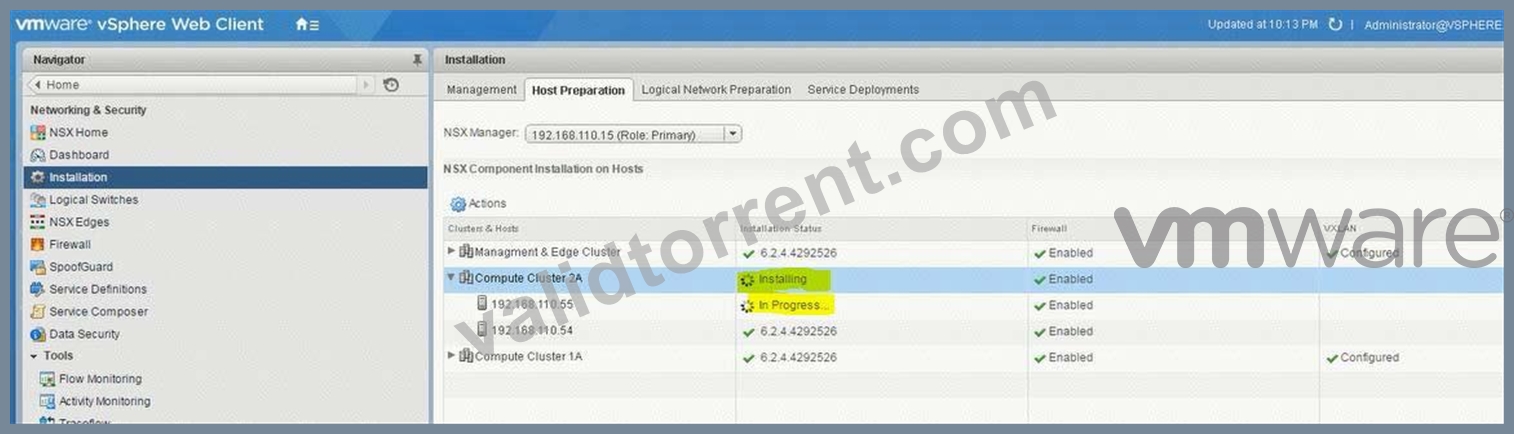
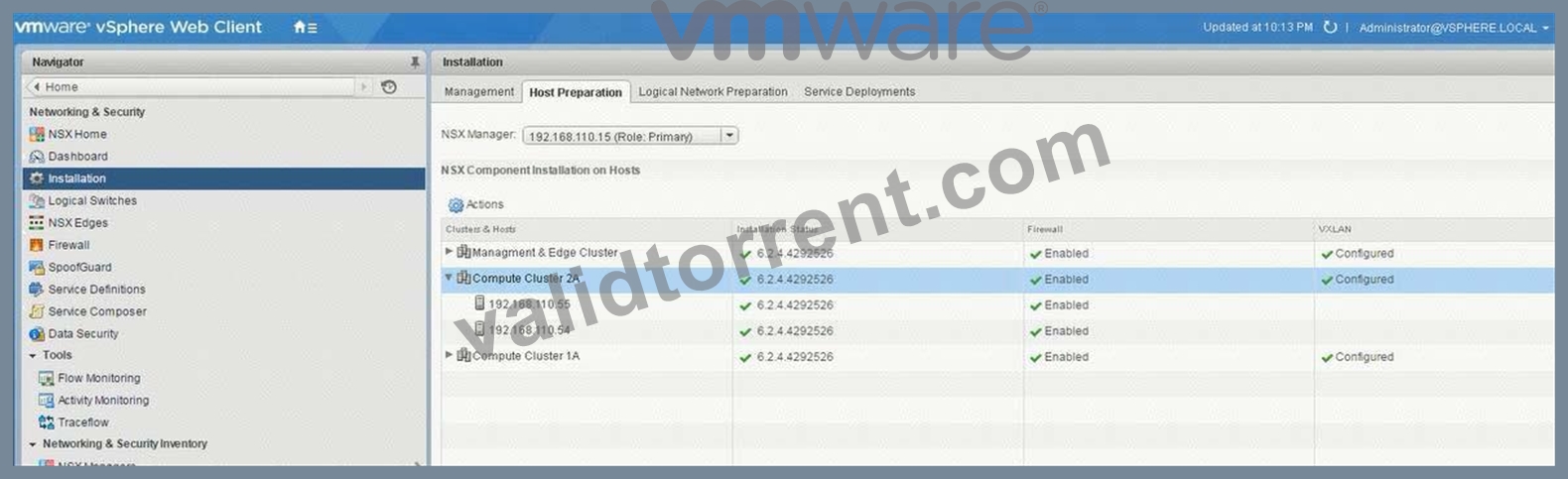
Host preparation has failed on esx-05a.corp.local on several attempts and the Compute Cluster 2A was left in an error state, determine and resolve the issue.
Requirements:
vCenter: vcsa-01a.corp.local
Credentials: [email protected] / VMware1!
Cluster: Compute Cluster 2A
IP Pool: Compute-2A
Transport Zone: Local-Transport-Zone-A
Esx-05a.corp.local IP information:
IP: 192.168.110.58
Netmask: 255.255.255.0
Gateway: 192.168.110.1
DNS: 192.168.110.10
1-Resolve deployment issue.
2-Prepare esx-05-a.corp.local for NSX in Compute Cluster 2A.
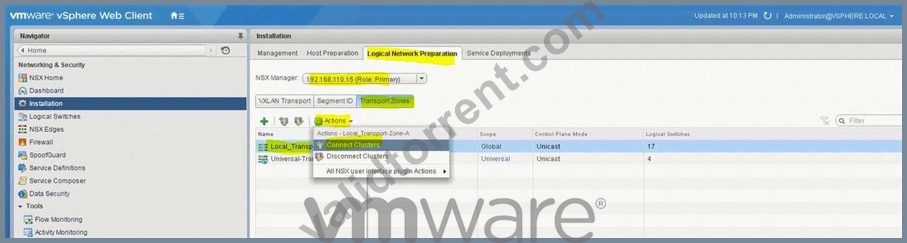
3-Ensure once the issue is resolved with the Compute Cluster 2A cluster, that it is connected to Local-Transport-Zone-A.
HOL LAB for Practice:
No Lab Module available
See the explanation part for complete solution.
Answer:
Explanation:
SOLUTION:
Follow the steps as:





NEW QUESTION 11
In the Dev environment, you have the application and database servers on separate networks created previously. Configure inbound only network security to allow only Dev application servers access to Dev database servers using MYSQL service port.
Requirements:
vCenter: vcsa-01a.corp.local
Credentials: [email protected] / VMware1!
Service Port: MYSQL
Networks: Dev-App-Tier-01-NEW and Dev-DB-Tier-01-NEW
Credentials for Dev VMs: root / VMware1!
This rule should be in its own "DB security-NEW" section.
Ensure inbound only network security allows Dev application servers access to Dev database servers.
This rule should not be prpogated to all NSX prepared clusters.
This rule should be created in a way that any new virtual machines on App and DB segments will be secured.
This rule should be created with the fewest rule(s) possible.
All other servers should be denied.
Ensure inbound security requirements are met.
HOL LAB for Practice:
See the explanation part for complete solution.
Answer:
Explanation:
SOLUTION:
Firewall -> add new Section:


Add new Rule under newly created Section:
Edit Rule Name:

Source = Dev-App-Tier-01-NEW (LS)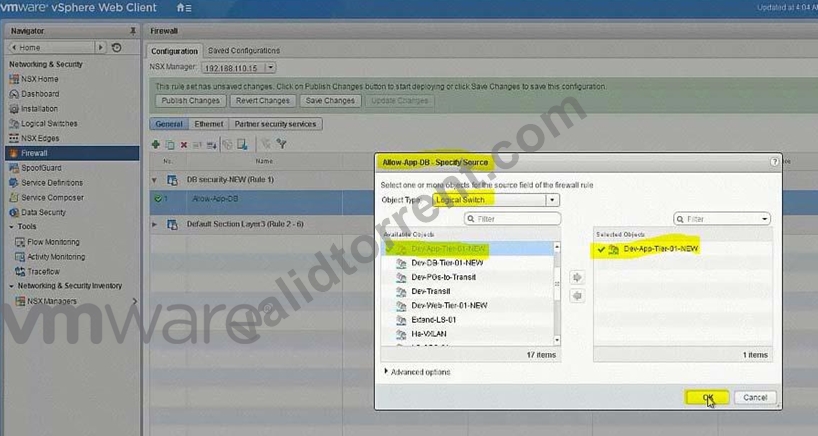
Destination = Dev-DB-Tier-01-NEW (LS)
Service = MySQL
Allow - In
Applied To: Logical Switch = Dev-DB-Tier-01-NEW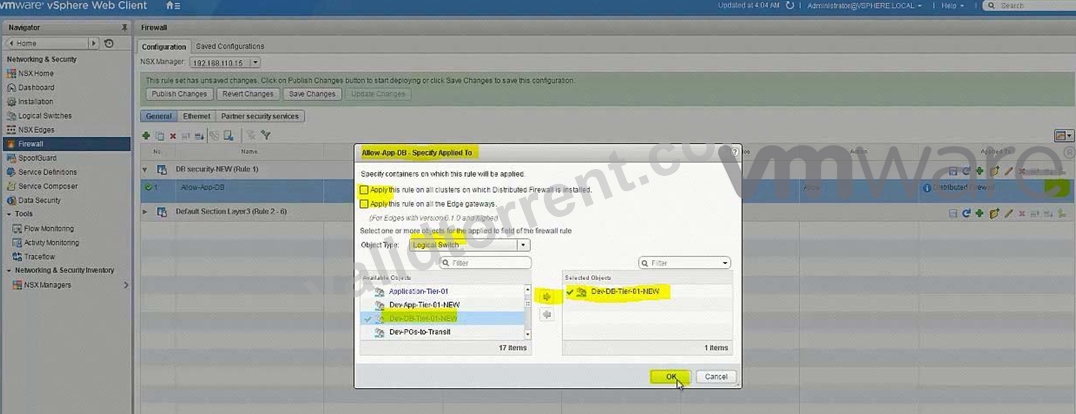
Add another rule = To Deny

Set destination: Logical Switch = Dev-DB-Tier-01-NEW

Bring to last the Deny rule:

NEW QUESTION 12
In the previous scenario, vCenter vcsa-b.corp.local was configured for NSX. Now the hosts must be prepared for NSX and the initial VXLAN configuration should be completed.
Requirements:
vCenter: vcsa-01b.corp.local
Credentials: [email protected] / VMware1!
Cluster: Compute Cluster 1B
ESXi Hosts: esx-01b.corp.local, esx-02b.corp.local
VTEP Information:
VMKNic Teaming Policy: Fail Over
VLAN: 0
MTU: 1600
IP Pools for VTEP:
* Name: Compute_1B_VTEP_Pool-New
* Gateway: 192.168.230.1
* Prefix Length: 24
* Static IP Pool: 192.168.230.51 - 192.168.230.60
* Segment ID Pool: 6001-7000 - HOL 1903-01 Page 26-36
* VXLAN Span: Compute Cluster 1B - HOL 1903-01 Page 26-36
* Transport Zone: Local-Transport-Zone-B-New - HOL 1903-01 Page 26-36
* Host must be prepared for NSX
* Use provided information to complete the initial VXLAN configuration.
* The underlying physical network does not support multicast.
* Ensure that requirements are met:
* Create the IP Pool as given:
* Do the Host preparation.
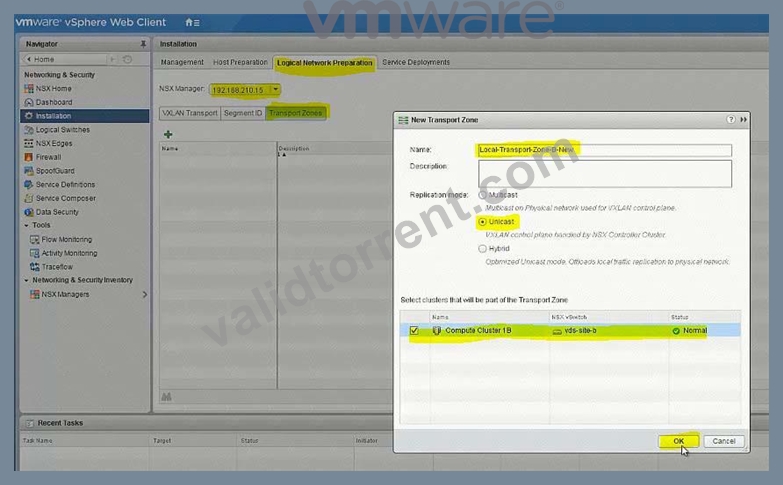
* Create a Local Transport Zone as given. - HOL 1903-01 Page 26-36
* Create the segment ID as given. - HOL 1903-01 Page 26-36
HOL LAB for Practice:
http://docs.hol.vmware.com/hol-isim/HOL-2019/hol-1903-01-nsxinstall-p2.htm and LAB - HOL 1903-01 Page 26-36 See the explanation part for complete solution.
Answer:
Explanation:
SOLUTION:
HOL 1903-01 Page 26-36
Login to vCenter b Web Client and from Networking and Security -> Installation -> select to SiteB NSX Manager -> Host Preparation and prepare the hosts as below:


Add Static Pool as per give details in the QUESTION



NEW QUESTION 13
Management has approved an expansion of the virtual infrastructure. You have been tasked to prepare Cross vCenter configuration with the second vCenter Server. Another administrator has provided a pre-configured vDS configuration file located on the Control Center Server. All identifiers must be maintained.
Requirements:
vCenterB server: vcsa-01b.corp.local
Credentials: [email protected] / VMware1!
vCenterB VAMI Credentials: root / VMware1!
Cluster: Computer Cluster 1B
ESXI Hosts: esx-01b.corp.local, esx-02.corp.local
Platform service controller: psc-01a.corp.local(192.168.110.9)
NSX Manager: nsmgr-01b.corp.local (192.168.210.15)
Credentials: admin / VMware1!
Time Zone: US/Pacific
*Configure nsmgr-01b.corp.local for vCenterB and psc-01a.corp.local
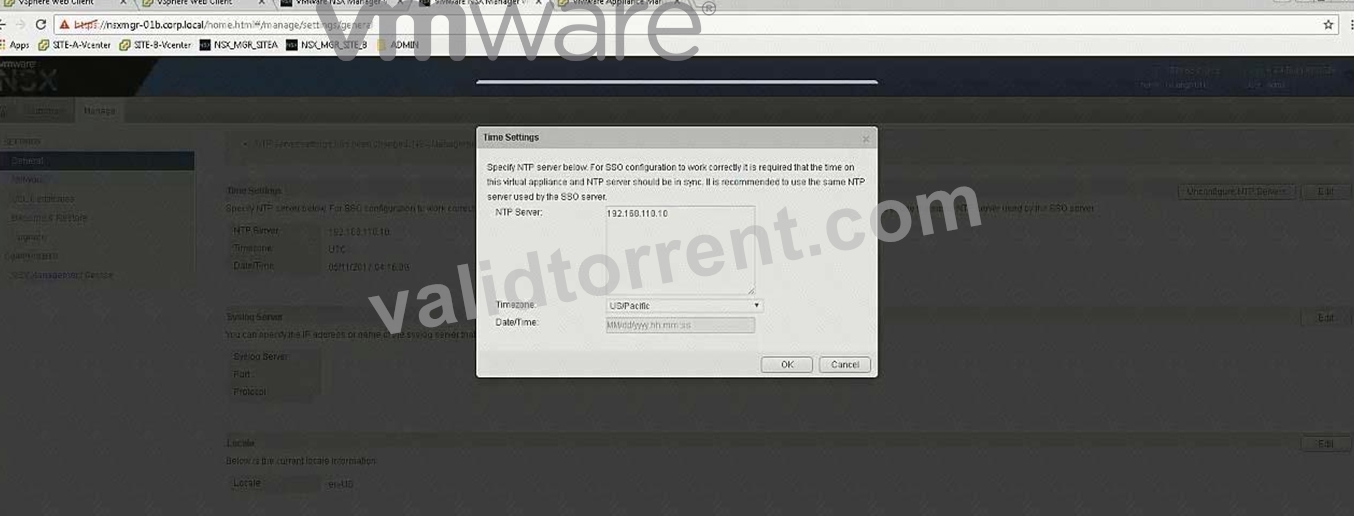
*Ensure nsxmgr-01b.corp.local uses the same NTP server as psc-01a.corp.local with a US/Pacific TimeZone.
*Import the new vDS configuration vds-site-b-Compute-New.zip
All identifiers must be maintained.
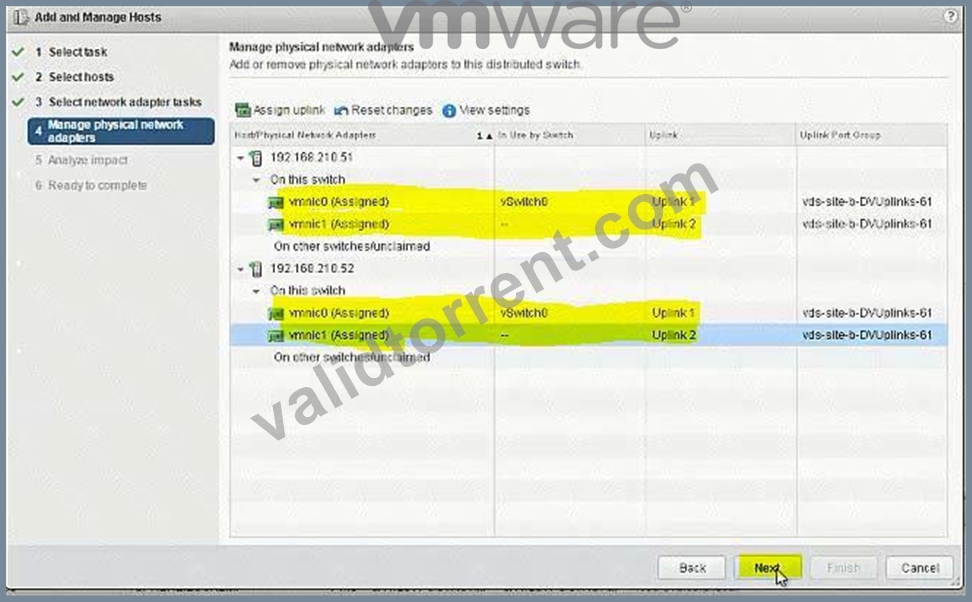
*Assign the remaining two used vmnics for the ESXi hosts to the newly imported vDS.
NOTE:
Do not migrate VMkernels from the standard switches on the hosts.
HOL LAB for Practice:
a http://docs.hol.vmware.com/hol-isim/HOL-2019/hol-1903-01-nsxinstall-p1.htm HOL-1903-01 Page 16 or you can directly Open a NSX manager in the lab and edit the existing settings bOpen PSC and NSX manager in HOL-1903-01 and look for NTP Server loand cation cExport existing vDS config and Import back the config for practice in HOL-1903-01 dNo Lab Module available See the explanation part for complete solution.
Answer:
Explanation:
SOLUTION:
Step 1: Login to PSC using VAMI credentials and note down the time zone and server details and use the same in SiteB NSX Manager time settings.
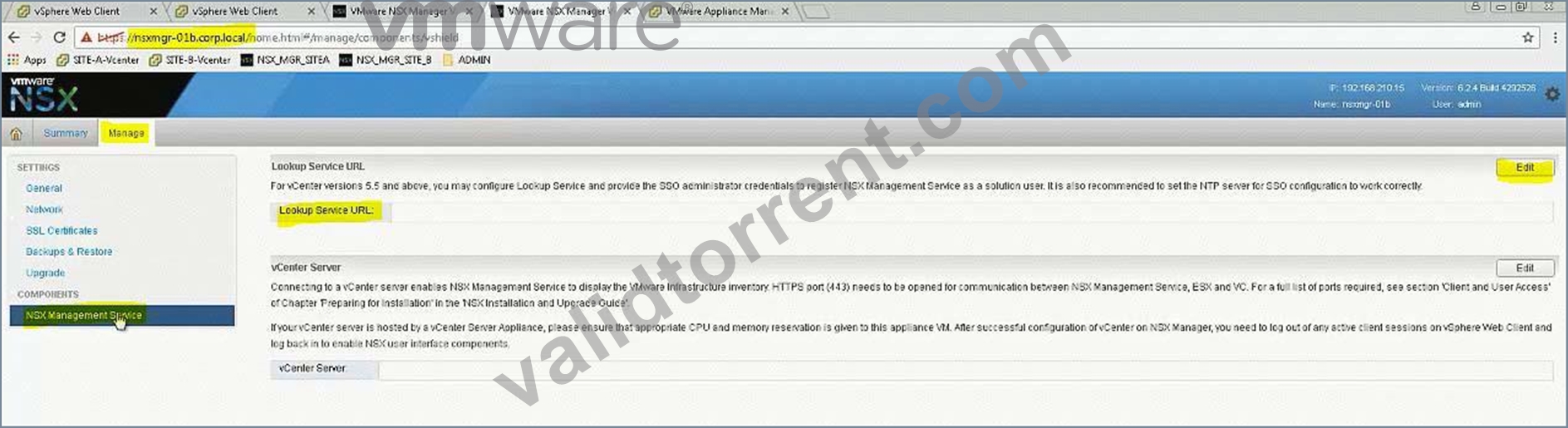
Step 2: Update the time settings, complete lookup service configuration, associate SiteB NSX manager to SiteB vCenter. Check the status from SiteA vCenter Webclient -> Networking & Security -> Installation -> Management.
Step 3: Import the Distributed switch to Cluster B, add the hosts & assign the interfaces.
Login to https://psc-01a.corp.local:5480/ to check the NTP server details and note it down. Use the VAMI credentials given to login. Need to click on Edit to see the server details in here as it is not showing up in the main page (In exam, it is showing in the main page itself).




Important NOTE:
In exam change Lookup Service Port according to NSX Manager of Site A which is working one.
It's 7444 in exam.


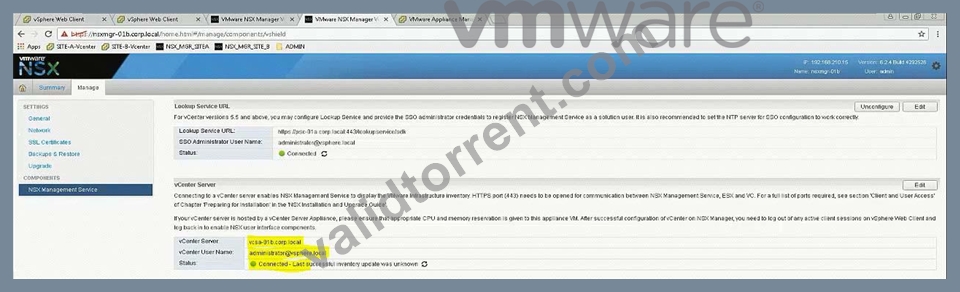
Click refresh if in case it shows as disconnected.
Login to SiteA vCenter using Web Client and confirm the status of both the NSX Managers: Installation -> Management.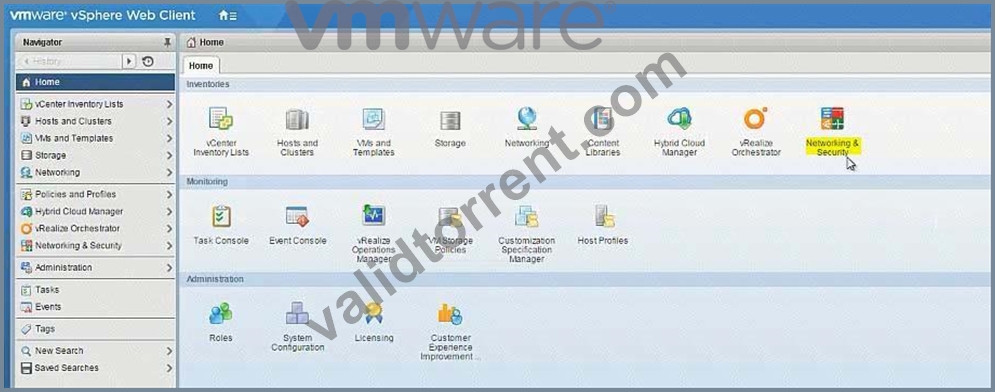


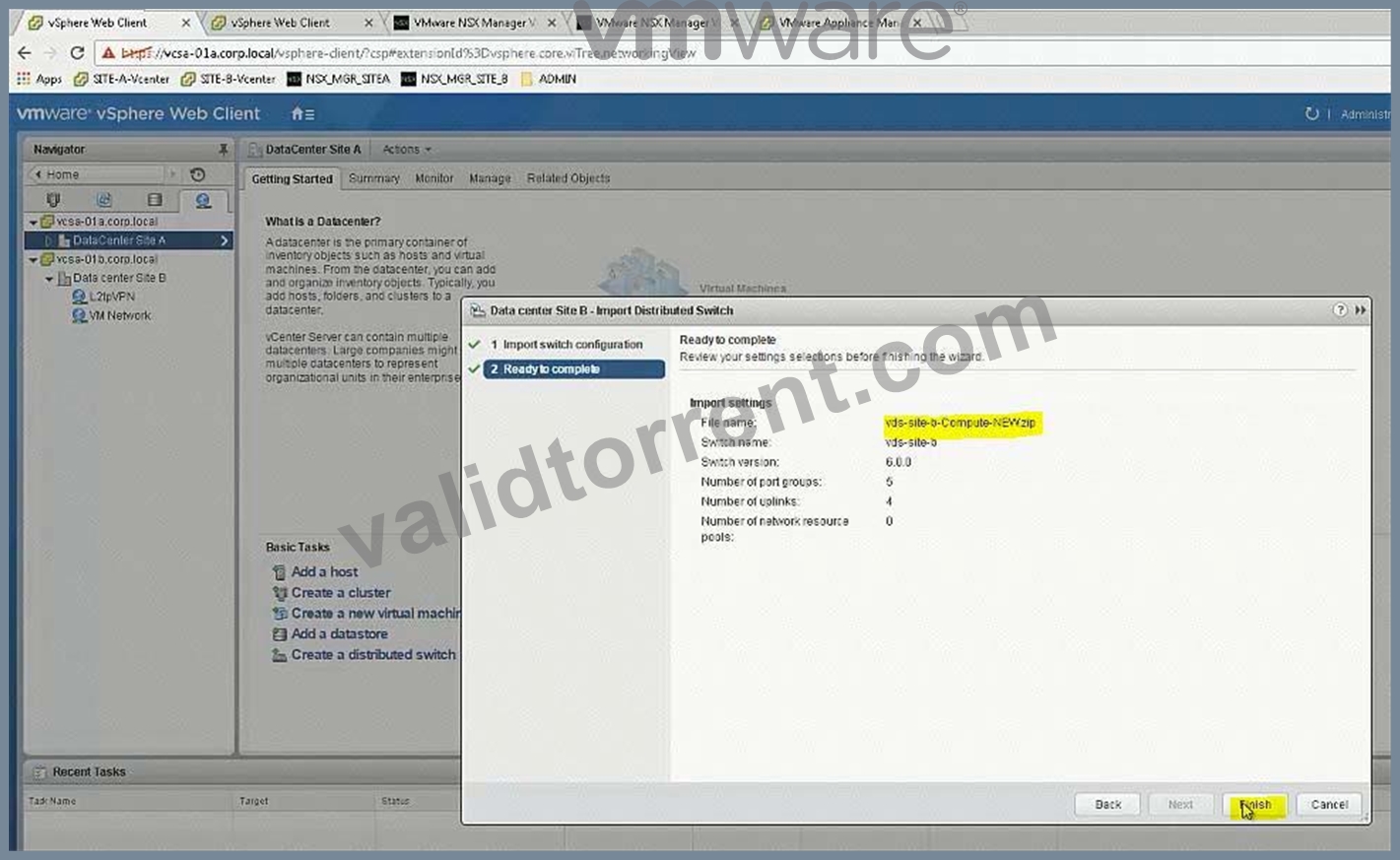


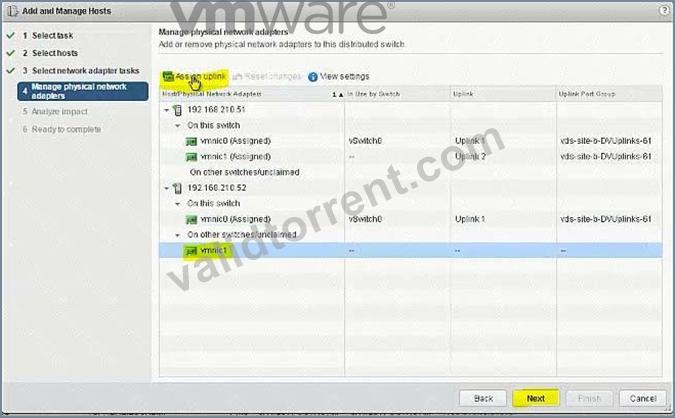



NEW QUESTION 14
The security team has requested that [email protected] have the ability to fully manage NSX Manager (192.168.210.15) for Site B.
Requirements:
vCenter: vcsa-01b.corp.local
Credentials: [email protected] / VMware1!
Ensure [email protected] has the ability to fully manage NSX Manager in SiteB.
NOTE:
You may have to log out of the web client and back in for 192.168.210.15 to show in web client.
HOL LAB for Practice:
See the explanation part for complete solution.
Answer:
Explanation:
SOLUTION:
NSX Manager in SiteB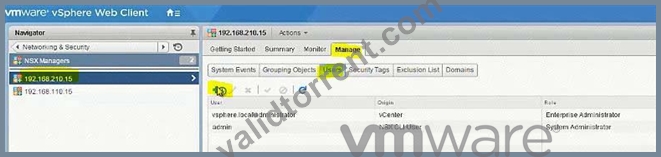
[email protected]
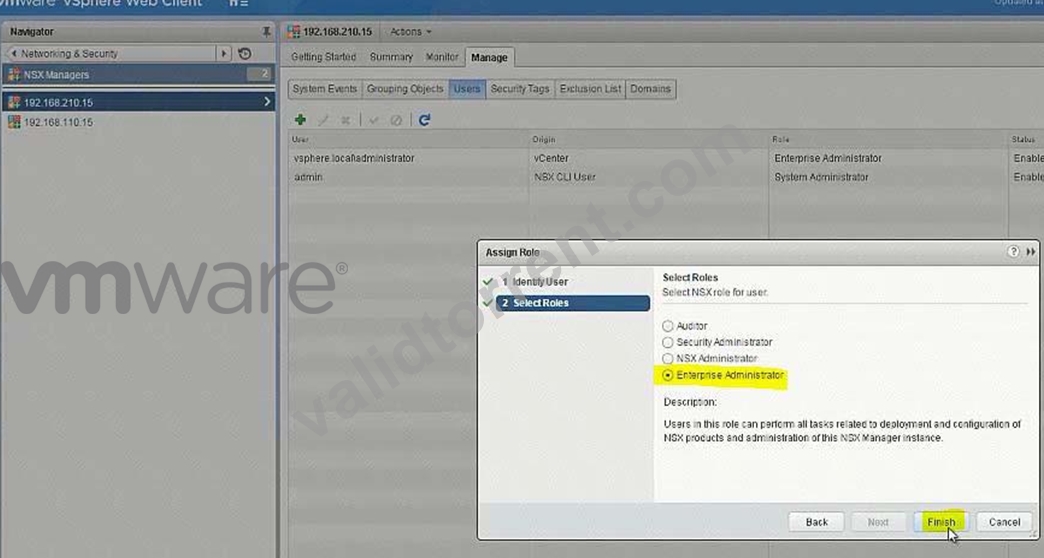
go to Nsx manager - b. select Manage Vcenter registration. check if lookup service is configured if not configured it will the details.
lookup service ip = Nsx Manager - a IP Address
Lookup service port = 7444
Lookup service= https://192.168.110.15:7444/lookupservice/sdk
SSO administrator = [email protected]
password = VMware1!
click on ok. click on yes.
NOTE: it will show u connected. if not connected. logout and login again
NEW QUESTION 15
You have been tasked with modifying an existing NSX API call to capture flow information for an organization. The existing API call is located on the ControlCenter desktop in a file name flowapi.txt.
The API call should be modified to collect Layer3 flow statistics between the dev-web-01a and the ControlCenter virtual machine.
Requirements:
vCenter: vcsa01a.corp.local
Credential: [email protected] / VMware1!
File location: flowapi.txt on the desktop of ControlCenter.
Modify and Save the existing API call to capture the requested information.
A REST Client has been added to Chrome and Firefox for this exercise.
Output the Response Body to a text file called apiresults.txt on the desktop of ControlCenter.
******************flowapi.txt***********************
https://<nsxmgr-ip>/api/2.1/app/flow/flowstats?contextId=datacenter-21&flowType=TCP_UDP&startTime
=0&endTime=
https://192.168.110.15/api/2.1/app/flow/flowstats?contextId=vm-26&flowType=Layer3&startTime=0&endT ime=1320917094000&
******************flowapi.txt***********************
HOL LAB for Practice:
See the explanation part for complete solution.
Answer:
Explanation:
SOLUTION:
Access the MOB by entering the following URL
https://vcsa-01a.corp.local/mob
[email protected]
VMware1!


Note down the vm number of dev-web-01a (in exam its like vm-216)
Then update flowapi.txt as
******************flowapi.txt***********************
https://<nsxmgr-ip>/api/2.1/app/flow/flowstats?contextId=datacenter-21&flowType=TCP_UDP&startTime
=0&endTime=
https://192.168.110.15/api/2.1/app/flow/flowstats?contextId=vm-216&flowType=Layer3
&startTime=0&endTime=1320917094000&startIndex=0&pageSize=2
******************flowapi.txt***********************
Then go to RESTClient.
GET
https://192.168.110.15/api/2.1/app/flow/flowstats?contextId=vm-216&flowType=Layer3
&startTime=0&endTime=1320917094000&startIndex=0&pageSize=2
SEND
Copy the content of "Response Body"
Paste in notepad and Save As "apiresults.txt"on the desktop of ControlCenter.


NEW QUESTION 16
Enable load balancing for the development environment allowing HTTPS access to the Dev-Web-01a and Dev-Web-02a servers.
Requirements:
vCenter: vcsa-01a.corp.local
Credentials: [email protected]
Self-signed certificate parameters:
Common Name: 192.168.5.100
Organization Name: ABC Medical
Organization Unit: IT
Locality: Palo Alto
State: CA
Country: United States
Message Algorithm: RSA
Key Size: 2048
Number of Days: 365
Web Servers: Dev-Web-01a, Dev-Web-02a
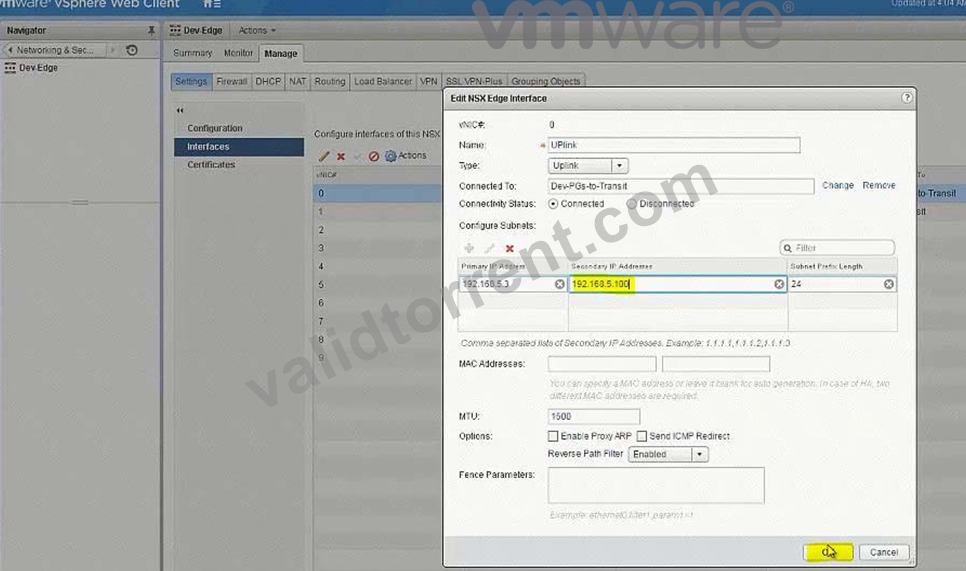
Use the secondary IP address of 192.168.5.100
New connections should consider current connections among all available members of the pool.
The web servers will not have SSL certificates installed. The web team has indicated that analytics based on source IP should be available.
Ensure all requirements have been met.
HOL LAB for Practice:
Load Balancer and other questions 7, 8, 9
See the explanation part for complete solution.
Answer:
Explanation:
SOLUTION:
Create Secondary address on Uplink Interface.
Generate CSR using the give details.
Enable Load-Balancer, create Profile, create Virtual Server.
Dev-Edge -> Manage -> Settings -> Interfaces -> Edit and add secondary IP address: 192.168.5.100

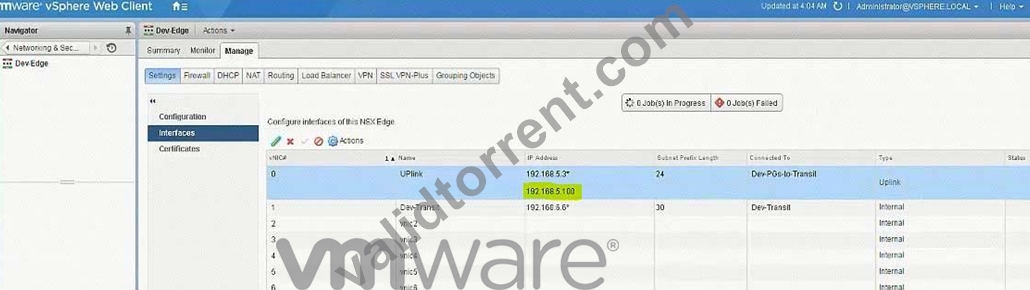
Create CSR as per given details from the question:
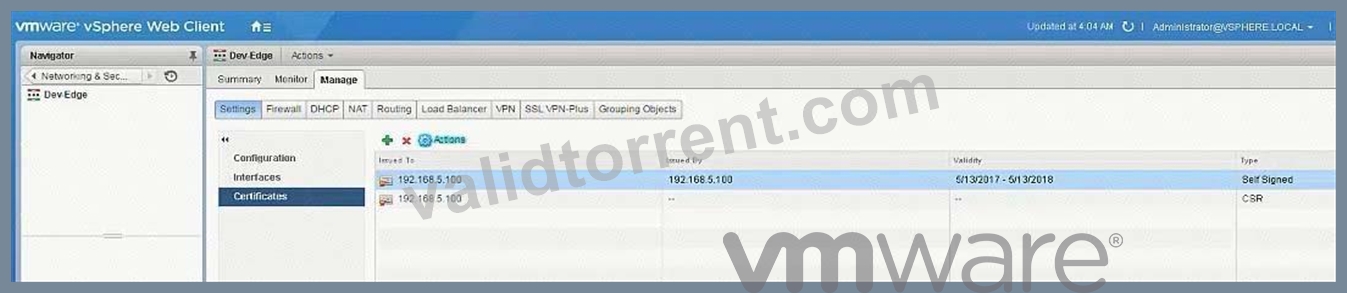
Dev-Edge -> Manage -> Settings -> Certificate -> Actions -> Generate CSR

Dev-Edge -> Manage -> Settings -> Certificate -> Actions -> Self Sign Certificate: Days = 365

Dev-Edge -> Manage -> Load Balancer -> Global Configuration -> Edit
Enable Load Balancer
Create Application Profile:
Check box for inser-forward-for-httpheader also below
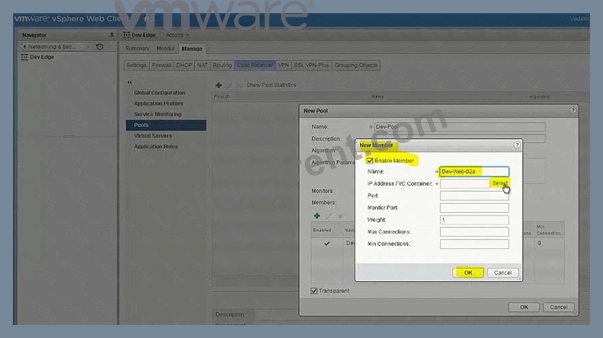
Create new Pool:

Add both Web member servers:




Add Virtual Servers: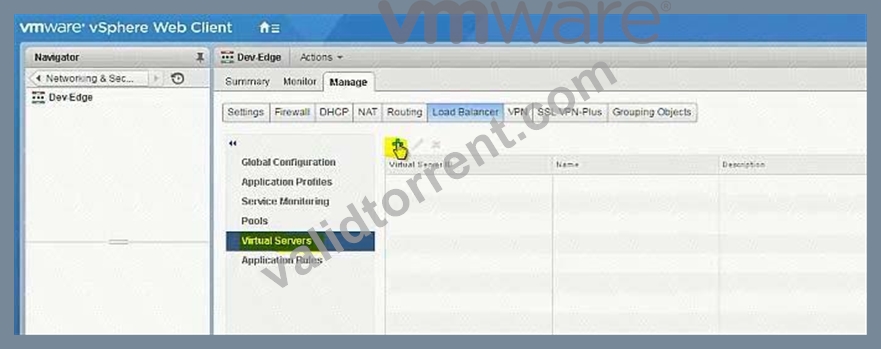

NEW QUESTION 17
Enable and configure cross vCenter support for and NSX implementation that contains two vCenter Servers:
vcsa-01a.corp.local and vcsa-01b.corp.local
Requirements:
vCenter: vcsa-01a.corp.local and vcsa-01b.corp.local
Credentials: [email protected] / VMware1!
NSX Manager Credentials: admin/VMware1!
The NSX Manager registered to vcsa-01a.corp.local should be responsible for all universal NSX objects.
A segment ID range of 16789-17563 is available for use with this exercise.
NOTE:
Allow time for synchronization to complete.
HOL LAB for Practice:
See the explanation part for complete solution.
Answer:
Explanation:
SOLUTION:
(1) select home. select installation select NsManager - b. select
logical network preparation tab. select segment ID. edit and enter pool id 6001-7000 do the same for Nsx MAnager -a and put pool id 5001-6000. be sure there is no overlaping of segment id in both the nsx managers.
(2) open Nsx Manager a and Nsx Manager B and start the universal synchoraniztion service from summary.
note: you can start the services in the beging to avoid any delay
Assign Primary Role to 192.168.110.15


Add Secondary NSX Manager


NEW QUESTION 18
You have been tasked with enabling syslog on the NSX Manager (nsmgr-01a.corp.local) and all NSX Controllers.
Requirements:
vCenter: vcsa-01a.crop.local
NSX Manager A: nsxmgr-01a.corp.local
Password: VMware1!
Syslog Information:
Server: 192.168.110.24
Port: 514
Protocol: UDP
Header Information:
Authentication: Basic
Content-Type: application/xml
Enable syslog for NSX Manager.
Enable syslog for NSX controllers.
HOL LAB for Practice:
See the explanation part for complete solution.
Answer:
Explanation:
SOLUTION:
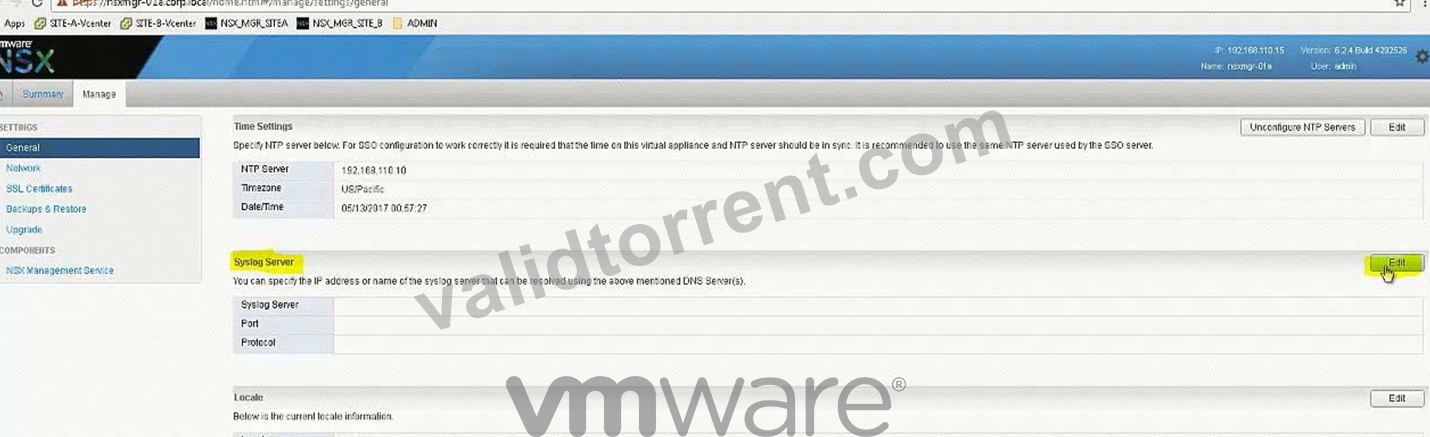
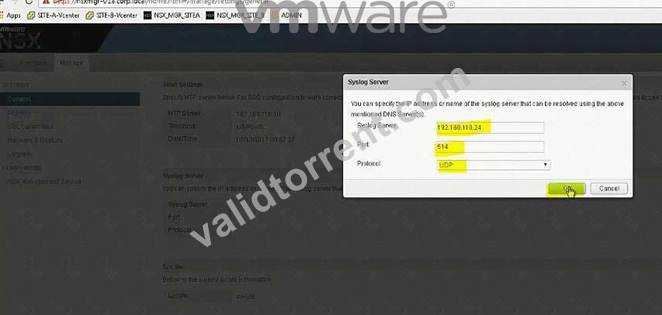

Open API guide from desktop, scroll down for Controller Syslog URI.
In exam search function doesn't work so you should be familiar with the document.
In exam, user hostname instead of IP address (IP address wont work).
For version (2.0), also check API guide version, it could be 2.1 or 2.0 GET
https:// nsxmgr-01a.corp.local/api/2.0/vdn/controller/controller-1/syslog

Copy the required parameters from API guide or memorize.


Verify
Do the same for controller-2
Do the same for controller-3
NEW QUESTION 19
......
Topics of VMware 3V0-643: VMware Certified Advanced Professional 6 - Network Virtualization Deployment (VCAP6-NV Deploy) Exam
Candidates should recognise each of the following aims prior to taking this exam. Each objective is described below; the applicant should have experience with and associated documentation along with relevant resources. That includes data relevant to the target. All applicable product information should be familiar to the applicant or have an equivalent skill set.
It is recommended that, where possible, the applicant use these courses and/or other resources to provide background information on the exam objectives. The syllabus for the VMware 3V0-643 Certified Advanced Professional 6 - Network Virtualization Deployment (VCAP6-NV Deploy) examination is listed below in detail of each section and their topics:
_1. Prepare VMware NSX Infrastructure _
Objectives covered by this section:
Objective 7.2 â Troubleshoot VMware NSX Connectivity Issues:
- Troubleshoot dynamic routing protocols
- Troubleshoot virtual machine connectivity
- Monitor and analyze virtual machine traffic with Flow Monitoring
3V0-643 Braindumps PDF, VMware 3V0-643 Exam Cram: https://passguide.validtorrent.com/3V0-643-valid-exam-torrent.html